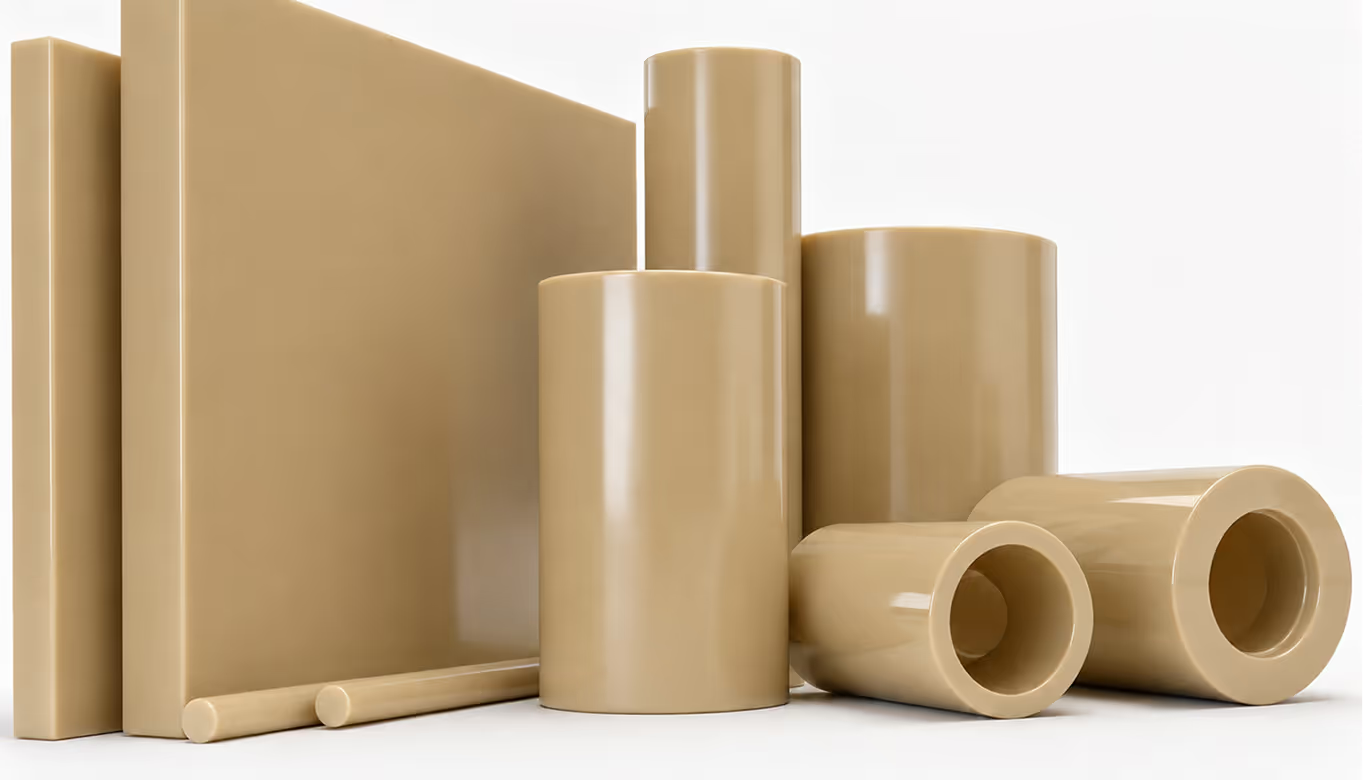
High-Performance Electrical Insulation
Dielectric-grade engineering plastics engineered to provide superior electrical resistance and signal integrity in extreme environments. These stock shapes are selected for their high dielectric strength, low dissipation factors, and the ability to maintain insulative properties at continuous use temperatures exceeding 200°C.
Key Highlights

Chemical Inertness
PVDF Kynar and PPS act as insulators in aggressive chemical baths or battery environments where other materials would degrade and short-circuit.
Hydrolytic Stability
PEEK and PPS maintain electrical insulation even when exposed to high-pressure steam, boiling water, or humid environments.
Non-Conductive Reinforcement
PEEK-GF30 and Ultem 2300 utilize glass fiber to add structural rigidity without compromising the material's insulative nature.
Low Dissipation Factor
Ideal for high-frequency applications where minimizing energy loss and signal distortion is critical.
Thermal Stability
Unlike commodity insulators that soften and lose resistance when hot, these grades maintain their dielectric constant across a wide temperature spectrum.
Exceptional Dielectric Strength
Materials like Ultem 1000 and PEEK provide a robust barrier against high-voltage arcing, even in thin-walled machined components.
Quick Selection: Which Grade

Precision Material Selection, Simplified.
Interact with Sofie to match your project needs with the perfect material solution. From tailored recommendations to in-depth product specs, Sofie provides the data-driven expert guidance you need to move from design to production.
Need help determining which grade is the right choice for your application?
Share your part requirements, operating conditions, or material challenges and our technical team will guide you on grade selection, stock formats, and supporting documentation.
Frequently Asked Questions
Yes. Materials that absorb water (like Nylon) lose their insulative properties as the moisture conducts electricity. PEEK, PPS, and Ultem have extremely low moisture absorption, ensuring they remain reliable insulators in humid or submerged conditions.
Glass is an insulator; carbon is a conductor. If your part needs to block electricity or prevent a short circuit, you must use a glass-filled grade. Carbon-filled grades will bleed current and fail as insulators.
This is the voltage at which an insulator fails and allows a spark to pass through. Ultem 1000 has one of the highest dielectric strengths in the industry (~830 V/mil), making it the top choice for high-voltage spacers and insulators.
Tracking is the formation of a conductive path on the surface of an insulator due to electrical stress. PPS and Ultem are highly resistant to tracking, making them safer for use in high-voltage switchgear and automotive connectors.
Yes. PEEK and Ultem have low dielectric constants and dissipation factors, which means they don't "soak up" or distort radio frequency signals, making them excellent for radomes and high-speed connector bodies.