Ultem (PEI) stock shapes engineered for high temperature and structural performance
Extruded Ultem (PEI) rods and plates are designed to maintain exceptional strength, stiffness, and dimensional stability. These shapes are specifically engineered to resist deformation during precision machining and ensure reliable, long-term performance in demanding, elevated-temperature environments.
%20.avif)
Why engineers choose Ultem
High-performance characteristics that make Ultem suitable for demanding machined components operating at elevated temperatures.

Thermal Stability
Maintains high mechanical strength and rigidity in continuous-use temperatures up to 170°C (340°F).

Structural Integrity
Features a high strength-to-weight ratio and is often used as a lightweight alternative to aluminum or stainless steel.

Dimensional Reliability
Low coefficient of linear thermal expansion ensures tight tolerances are maintained during both the machining process and thermal cycling in the field.

Electrical Excellence
Boasts one of the highest dielectric strengths (up to 830 V/mil) of any commercially available thermoplastic, with stable electrical properties across a wide range of frequencies and temperatures.

Chemical & Flame Resistance
Inherently flame retardant (UL 94 V-0 rated) with high resistance to automotive fluids, fully halogenated hydrocarbons, alcohols, and aqueous solutions.

Why Choose Ultem™ from Quantum AEP
See how Quantum’s manufacturing approach supports stable machining and reliable performance.
Prime Raw Materials Only
We extrude Ultem™ using only high-purity, prime-grade resins. By avoiding regrind and off-spec material, we ensure predictable mechanical, thermal, and electrical behavior across every batch, meeting the strict requirements of aerospace and medical industries.
Controlled Annealing for Dimensional Stability
Our carefully managed extrusion and multi-stage annealing processes are designed to relieve internal stresses. This ensures that Ultem™ rods and plates maintain their shape, significantly reducing the risk of warping or distortion during high-precision machining and in-service thermal cycling.
Advanced Process Discipline
We maintain tight control over temperature and pressure parameters during extrusion to eliminate internal defects such as voids or inconsistencies. This is particularly critical for thicker cross-sections and large-diameter rods where heat management is most difficult.
Full Traceability and Quality Records
Each batch is logged with comprehensive extrusion parameters and rigorous inspection checks. This provides engineering teams with full visibility into material history and compliance, supporting mission-critical applications where failure is not an option.
Neutral Supply: No Finished Part Machining
Quantum AEP focuses exclusively on producing high-quality stock shapes. By not machining finished parts, we avoid conflicts of interest with our machine shop partners and ensure our expertise remains dedicated to the science of consistent, high-performance material production.
Reliable Batch-to-Batch Performance
Through standardized workflows and stable manufacturing parameters, we minimize variability. This consistency allows CNC programmers and engineers to rely on the same feeds, speeds, and performance characteristics every time they order from us.
Common Ultem machined components
Examples of high-precision parts typically manufactured from our Ultem™ stock shapes to leverage their thermal, electrical, and structural superiority.

Structural Parts and Brackets
Stiff, load-bearing mounts and structural housings in industrial machinery. Using Ultem 2300 (30% Glass Filled), these components achieve a flexural modulus of 1,300,000 psi, providing the rigidity of metal with the corrosion resistance of a high-performance polymer.

Enclosures and Protective Housings
High-heat protective covers and enclosures for sensors or sensitive circuitry. Inherently flame retardant without additives, ensuring housings don’t contribute to smoke or toxic gas release.

Industrial Thermal Management
Heat shields, sensor housings, and pump components operating near heat sources. With a continuous use temperature of 170°C (340°F), maintains shape and strength where standard engineering plastics would fail.

Medical and Analytical Equipment
Manifolds, surgical instrument handles, and sterilization trays. Capable of withstanding repeated autoclave cycles without loss of mechanical integrity or dimensional stability.

Aerospace and Transportation Interiors
Ducting, clips, fasteners, and internal structural brackets. Meets strict FAA smoke and flammability requirements (UL 94 V-0 and 5VA) with high strength-to-weight ratio.
Electrical and Electronic Components
High-frequency connectors, terminal blocks, chip test sockets, and insulators. Boasts a dielectric strength of 830 V/mil and maintains stable electrical properties across a wide range of frequencies and temperatures.

Ultem™ Grades Available for Machining
Select from unfilled and glass-reinforced Ultem grades based on mechanical strength, stiffness, and dimensional stability requirements.
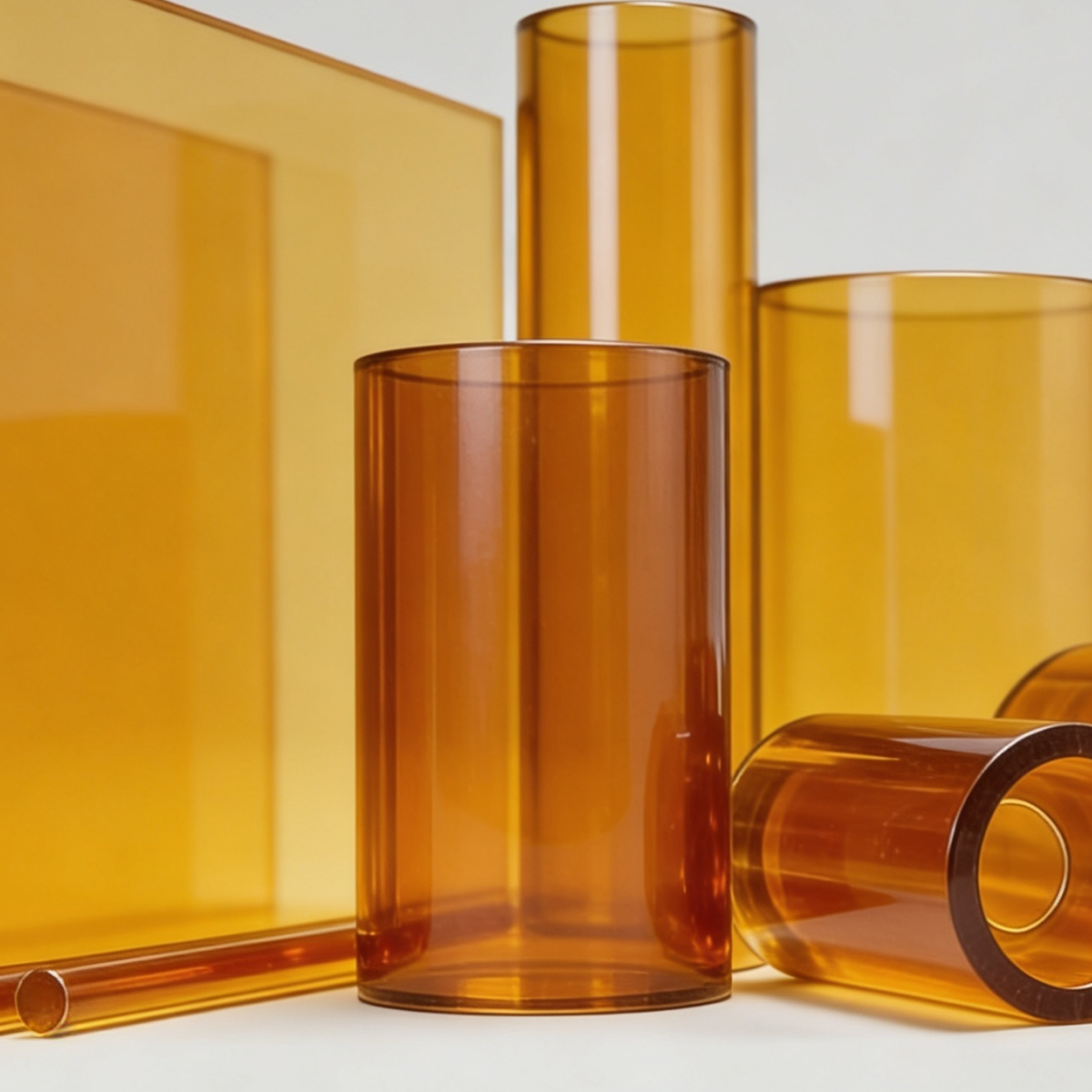
Ultem 1000
Unfilled polyetherimide with exceptional heat resistance, inherent flame retardancy, and excellent electrical insulation for high-temperature applications.
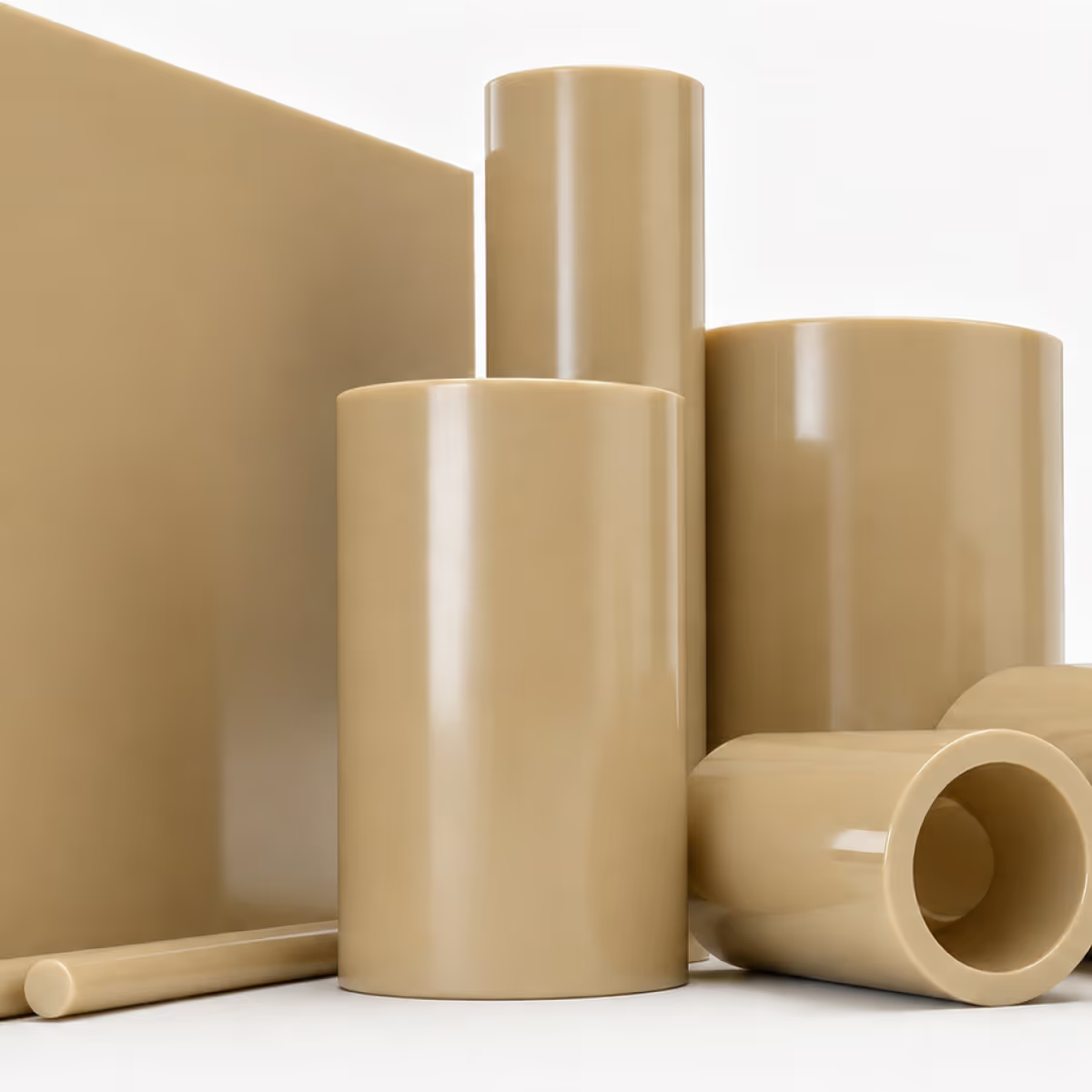
Ultem 2100 (GF10)
10 percent glass fiber reinforced PEI for improved stiffness, dimensional stability, and high heat resistance.
Ultem 2200 (GF20)
20 percent glass fiber reinforced PEI for superior structural rigidity, reduced creep, and high heat resistance.
Ultem 2300 (GF30)
30 percent glass fiber reinforced PEI for maximum stiffness, minimal deflection, and high-load structural applications.
Ultem Technical Data Overview
This comprehensive technical table compares the mechanical, thermal, and electrical properties of the Ultem™ (PEI) family. From the ductile unfilled 1000 series to the high-modulus Carbon Fiber and Chemical Resistant specialties, use this data to identify the optimal grade for your specific performance environment.

| Property | Ultem 1000 | Ultem 2100 | Ultem 2200 | Ultem 2300 | Ultem CRS 5201 | Ultem CRS 5301 | Ultem CF15 |
|---|---|---|---|---|---|---|---|
| Tensile Strength (psi) | 15,200 | 16,600 | 20,100 | 24,500 | 19,500 | 23,500 | 26,000+ |
| Flexural Modulus (psi) | 480,000 | 650,000 | 900,000 | 1,300,000 | 1,000,000 | 1,400,000 | 1,650,000+ |
| Impact Strength (ft-lb/in) | 1.0 | 1.1 | 1.6 | 1.6 | 1.4 | 1.5 | 1.2 |
| Heat Deflection (264 psi) | 392°F | 405°F | 408°F | 410°F | 420°F | 425°F | 415°F |
| CTE (10⁻⁵ in/in/°F) | 3.1 | 1.8 | 1.4 | 1.1 | 1.5 | 1.0 | 0.8 |
| Dielectric Strength (V/mil) | 830 | 700 | 670 | 630 | 650 | 600 | Conductive |
| Primary Advantage | Toughness/Insulation | Mod. Stability | High Strength | Max Rigidity | Chem. Resistance | Chem. + Rigidity | High Strength/Static Dissipative |
Exact performance values vary by grade.
Refer to the grade data sheets for detailed specifications.
Interact with Claudia to match your project needs with the perfect material solution. From tailored recommendations to in-depth product specs, Claudia provides the data-driven expert guidance you need to move from design to production.

Ultem rods, plates, and tubular bars are available
Standard sizes supplied as extruded Ultem rods, plates, and tubular bars. All Ultem stock shapes are produced under controlled conditions to support consistent machining and dimensional stability.
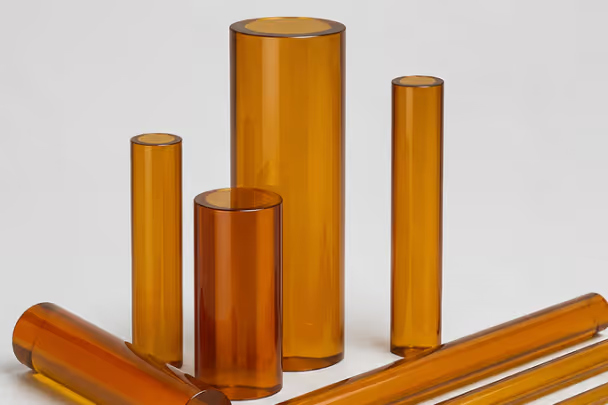
Rods
Extruded Ultem rods are supplied in a range of diameters suitable for precision machining, electrical components, structural parts, and high-temperature applications.
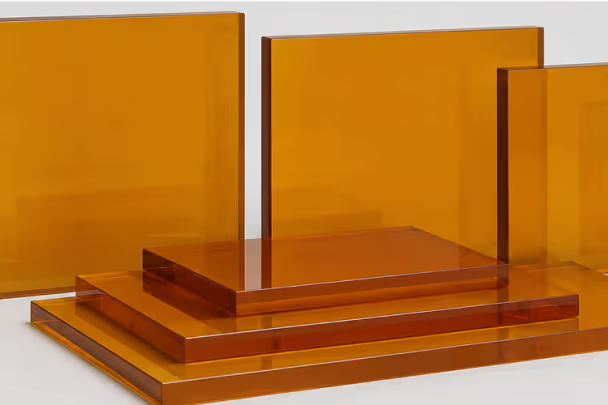
Plates
Ultem plates are available in standard thicknesses for machined components such as panels, housings, brackets, and structural supports.
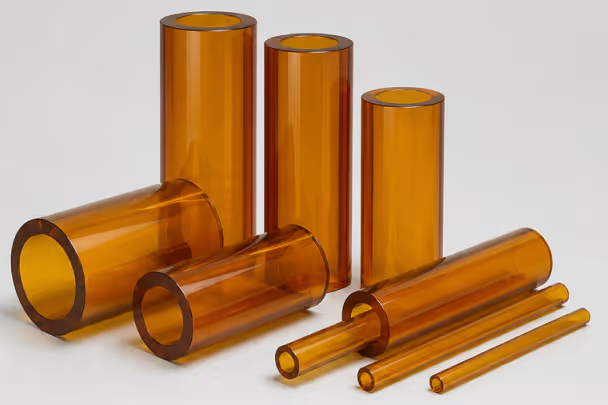
Tubular Bars
Ultem tubular bars supplied for applications requiring material efficiency, weight reduction, and stable machining of hollow components.
Trusted by World's Leading Companies

















Need help selecting the right Ultem grade?
Share your application details, and our team will recommend suitable grades, shapes, and supporting data sheets.
Frequently Asked Questions
Ultem™ is a high-performance polyetherimide (PEI) thermoplastic renowned for its extreme temperature resistance, mechanical strength, and dimensional stability. It is the gold standard for machined components in the electrical, aerospace, medical, and semiconductor industries where reliability under heat is non-negotiable.
Choose Ultem™ when your application exceeds the thermal or structural limits of standard engineering plastics. While Nylon or Delrin may soften at 100°C, Ultem™ maintains its structural integrity at continuous temperatures up to 170°C (340°F). It is also preferred when inherent flame resistance (UL 94 V-0) and high dielectric strength are required.
Quantum AEP supplies a comprehensive range of PEI grades to meet specific structural and chemical demands:
- Ultem™ 1000 (Unfilled): High ductility, electrical insulation, and transparency.
- Ultem™ 2100 (10% Glass Fiber Filled): Improved stiffness and lower thermal expansion.
- Ultem™ 2200 (20% Glass Fiber Filled): Enhanced rigidity for structural shafts and mounts.
- Ultem™ 2300 (30% Glass Fiber Filled): Maximum stiffness and creep resistance.
- Ultem™ CF15 (15% Carbon Fiber Filled): Highest modulus and static dissipative properties.
- Ultem™ CRS5201: Specialized copolymer for extreme chemical resistance.
Yes. Ultem™ is highly machinable and allows for very tight tolerances. Because Quantum AEP uses a controlled annealing process, our stock shapes have minimal internal stress, which prevents warping or "springing" during complex CNC milling or turning operations.
We supply Ultem™ in a variety of dimensions to minimize material waste:
- Extruded Rods: Available in a wide range of diameters from ½" to 12" for turned components.
- Plates/Sheets: Precision extruded from ⅜" to 5" thick for milled manifolds and brackets.
- Tubular Bars: Ideal for bushings and housings to reduce machining time and swarf.
Ultem™ features a Glass Transition Temperature (Tg) of 217°C (423°F). It retains a high percentage of its tensile strength and modulus even as it approaches its continuous-use limit, making it one of the most stable amorphous thermoplastics available for long-term thermal exposure.
No. Ultem™ is inherently flame resistant. It has an exceptionally high Limiting Oxygen Index (LOI) and meets UL 94 V-0 and 5VA ratings without the use of halogenated flame retardants. This makes it safer for aerospace interiors where low smoke and low toxicity are critical.
Yes. It is highly resistant to most alcohols, acids, and hydrocarbon solvents. In the medical field, it is prized for its ability to withstand repeated autoclave sterilization cycles (steam), as well as Gamma and EtO sterilization, without losing its mechanical properties.
Glass-filled grades (2100, 2200, 2300) are significantly more abrasive than unfilled Ultem™ 1000. When machining these grades, carbide or diamond-tipped tooling is recommended to maintain sharp edges and prevent tool wear, especially in high-volume production.
Absolutely. Ultem™ maintains a stable dielectric constant and low dissipation factor over a wide range of temperatures and frequencies. It is the material of choice for high-frequency insulators and GHz-range test sockets in the semiconductor industry.
Environmental Stress Cracking: Ultem™ is an amorphous polymer, highly susceptible to Environmental Stress Cracking (ESC) when exposed to certain polar solvents. Avoid if exposed to Methyl Ethyl Ketone (MEK), Acetone, Methylene Chloride, or highly concentrated Ethyl Acetate. The material will develop micro-cracks or "craze," leading to sudden structural failure.
High-Friction/Bearing Applications: Standard Ultem™ 1000 and the 2000 series (glass-filled) have poor tribological properties. Avoid if the part is a high-speed bearing, bushing, or sliding wear strip. Ultem™ tends to "gall" or seize when rubbed against metal or itself. For these applications, Delrin® AF or PEEK-PTFE are much better choices.
Exposure to Strong Bases and Steam (Long-Term): While Ultem™ handles autoclaving well, it can be degraded by certain alkaline environments. Avoid if exposed to strong bases (High pH) like Sodium Hydroxide or constant, high-pressure live steam over years of service. Hydrolysis can occur, causing the polymer chains to break down and the material to become brittle.
Tight-Tolerance Press-Fit Assemblies: Because Ultem™ (especially the glass-filled grades) is extremely stiff and has low elongation, it does not "give" like Nylon or Delrin. Avoid if you need a high-interference press-fit or a "living hinge." The part will likely crack during assembly rather than deforming to fit.
High-Impact/Cryogenic Environments: At extremely low temperatures, amorphous plastics like Ultem™ lose their remaining ductility. Avoid if the part must withstand heavy sledge-hammer-like impacts or operates in cryogenic liquid environments where it may become "glass-brittle."