Kynar 740 PVDF | Chemical and Corrosion-Resistant Machined Components
Kynar 740 is a homopolymer PVDF supplied as extruded rods and plates. Designed for machined parts that require excellent chemical resistance, high purity, and stable performance in corrosive environments.

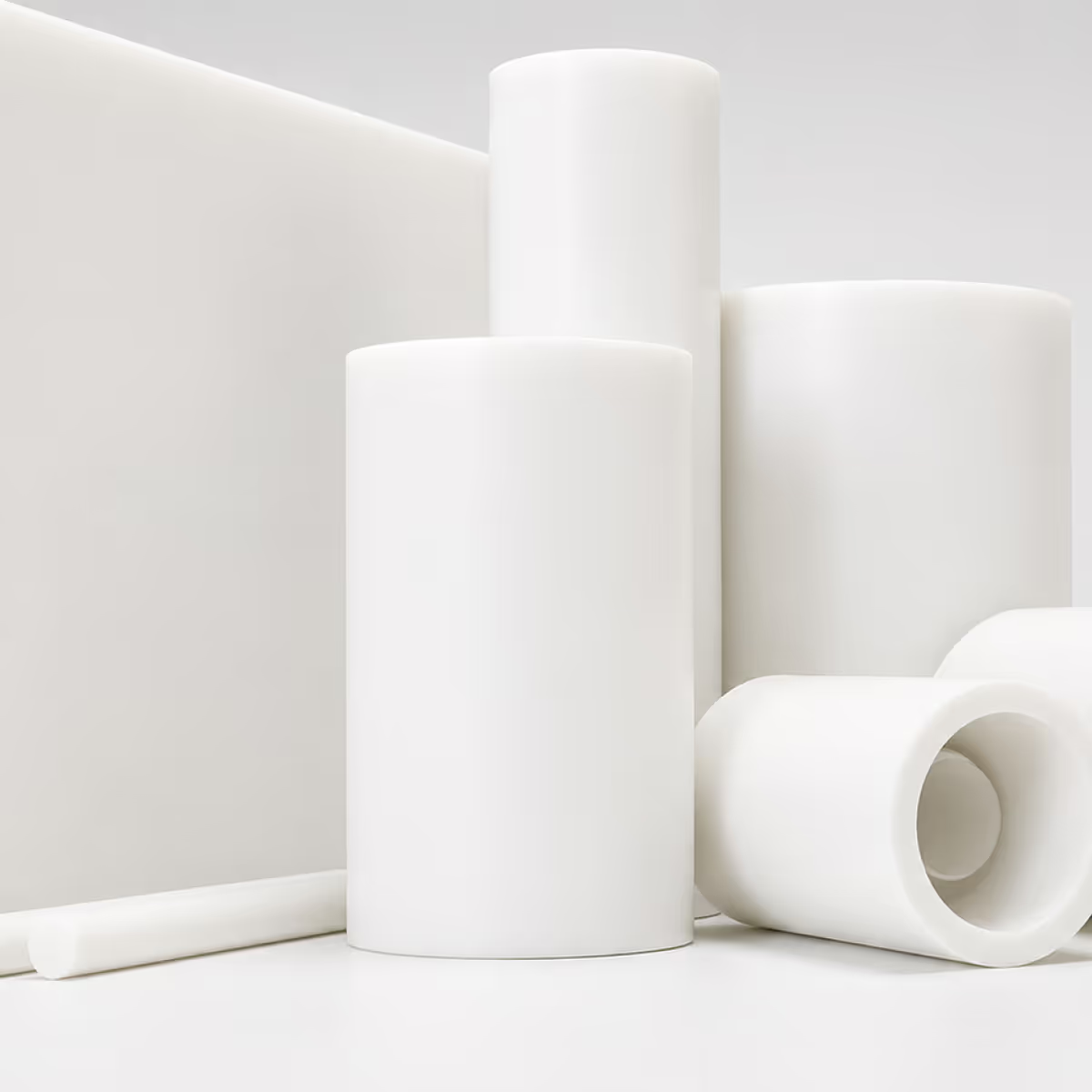
What Kynar 740 offers
Performance characteristics that make Kynar 740 the trusted choice for chemically aggressive and corrosion-prone environments.

Excellent resistance to aggressive chemicals
Resists acids, bases, solvents, and oxidizing agents commonly found in chemical processing and corrosive environments.

High purity and low extractables
Well suited to applications where contamination control and material purity are critical.

Low moisture absorption
Holds dimensional stability and performance in humid or wet operating conditions.

Stable across a wide temperature range
Performs reliably in both ambient and elevated-temperature environments typical of chemical processing systems.

Naturally corrosion resistant
Unlike metals, PVDF does not corrode, pit, or degrade when exposed to aggressive media.

Common components made from Kynar 740
Typical machined parts used in chemically aggressive and corrosion-prone environments.

Piping System Components
Machined fittings, supports, and structural elements in corrosive environments.

Laboratory and Analytical Equipment Parts
Used where contamination control and chemical compatibility are critical.
Water Treatment System Components
Provides long-term resistance in chlorinated or chemically treated water systems.

Semiconductor Wet-Process Equipment
Used in tanks, supports, and fixtures requiring high purity and chemical resistance.

Pump and Valve Parts
Suitable for housings, seats, and components exposed to corrosive fluids.

Chemical Processing Equipment Components
Used in systems exposed to acids, bases, and solvents.
Kynar 740 Technical Properties
| Property | Test | Kynar 740 | Unit |
|---|---|---|---|
| Tensile Strength | ASTM D638 | 7,300 | PSI |
| Tensile Modulus | ASTM D638 | 240 | KSI |
| Elongation @ Break | ASTM D638 | 300 | % |
| Flexural Strength | ASTM D790 | N/A (flexible) | PSI |
| Flexural Modulus | ASTM D790 | 240 | KSI |
| Compressive Strength | ASTM D695 | 8,000 | PSI |
| Izod Impact (notched) | ASTM D256 | No break | ft-lb/in |
| Hardness Shore D | ASTM D2240 | 77 | — |
| Property | Test | Kynar 740 | Unit |
|---|---|---|---|
| HDT @ 264 psi | ASTM D648 | 248 | °F |
| Melting Point | — | 338 | °F |
| CLTE | ASTM E831 | 7.2 | in/in/°F × 10⁻⁵ |
| Thermal Conductivity | ASTM C177 | 1.2 | BTU·in/hr·ft²·°F |
| Property | Test | Kynar 740 | Unit |
|---|---|---|---|
| Dielectric Strength | ASTM D149 | 1,060 | V/mil |
| Dielectric Constant | ASTM D150 | 8.4 | — |
| Dissipation Factor | ASTM D150 | 0.049 | — |
| Surface Resistivity | ASTM D257 | 10¹³ | Ω/sq |
| Volume Resistivity | ASTM D257 | 10¹³ | Ω·cm |
| Property | Test | Kynar 740 | Unit |
|---|---|---|---|
| Coefficient of Friction (Dynamic) | ASTM D3702 | 0.30 | — |
| Wear Rate (K-factor) | ASTM D3702 | 100 | × 10⁻¹⁰ in³·min/ft·lb·hr |
| Property | Test | Kynar 740 | Unit |
|---|---|---|---|
| Specific Gravity | ASTM D792 | 1.78 | — |
| Water Absorption (24hr) | ASTM D570 | 0.04 | % |
| Flammability | UL94 | V-0 | — |

Kynar 740 rods, plates & tubular bars
Extruded stock shapes are supplied in standard diameters and thicknesses, with custom dimensions available for specific applications.
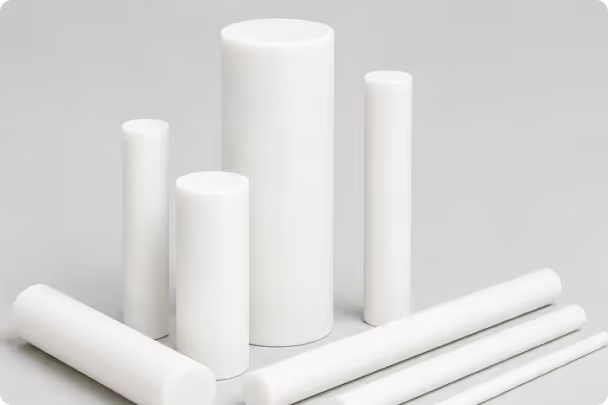
Rods
Extruded Kynar 740 rods are supplied for chemically resistant and corrosion-exposed machined components. Rods typically available from 3/8" to 8" diameter.
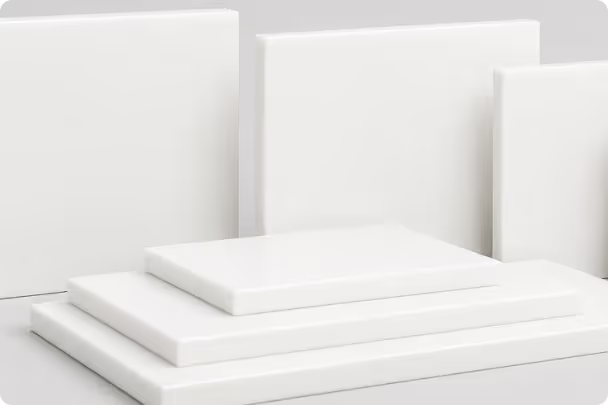
Plates
Kynar 740 plates are supplied for machined panels, housings, and corrosion-resistant components. Plates available from 3/8" to 4" thickness.
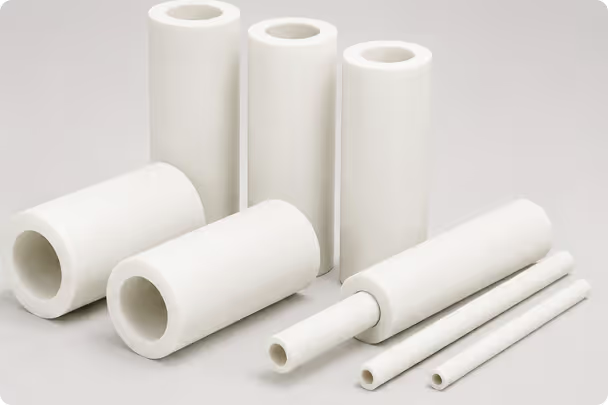
Tubular Bars
Tubular bars are available for applications requiring corrosion resistance with reduced weight.

Trusted by World's Leading Companies

















How Kynar 740 compares to other PVDF grades
Quick reference guide to help you choose the right PVDF material for your application.
| Grade | Best For | Flexibility | Chemical Resistance | Notes |
|---|---|---|---|---|
| Kynar 740 | High-purity chemical environments | Moderate | Excellent | Baseline PVDF with strong chemical resistance. |
| Kynar 1000 | Higher molecular weight applications | Moderate | Excellent | Improved toughness and stress crack resistance. |
| Kynar Flex | Flexible and impact-resistant parts | High | Very good | Modified for flexibility. |
Need help determining if Kynar 740 is the right choice?
Share your chemical exposure details, purity requirements, or operating conditions and our technical team will guide you on grade selection, stock formats, and supporting documentation.
- Response within one business day
- Reviewed by our technical team
- No obligation or sales pressure
Frequently Asked Questions
Kynar 740 is a PVDF homopolymer known for excellent chemical resistance, high purity, and corrosion-resistant performance.
Choose Kynar 740 when rigidity, purity, and chemical resistance are more important than flexibility or impact resistance.
Kynar 740 is a standard PVDF grade, while Kynar 1000 offers higher molecular weight for improved toughness and stress crack resistance.
Yes. Kynar 740 performs well in environments involving strong acids, bases, and solvents.
Moisture absorption is very low, helping maintain dimensional stability in wet or humid environments.
Yes. Its low extractables make it suitable for semiconductor, chemical, and laboratory applications.
Yes. PVDF provides good electrical insulation properties.
Kynar 740 is supplied as extruded rods, plates, and tubular bars in standard sizes, with custom dimensions available on request.
Yes. It is commonly used as a metal replacement in corrosive environments where metals may fail.
Kynar 740 stands out for combining strong chemical resistance, purity, and machinability in aggressive environments.