Bearing Grade PPS Designed as a Cost-Effective Alternative to PEEK Bearing Grades
Internally lubricated PPS bearing grade engineered for low friction, wear resistance, and dimensional stability in demanding industrial applications where the extreme temperature capability of PEEK is not required.

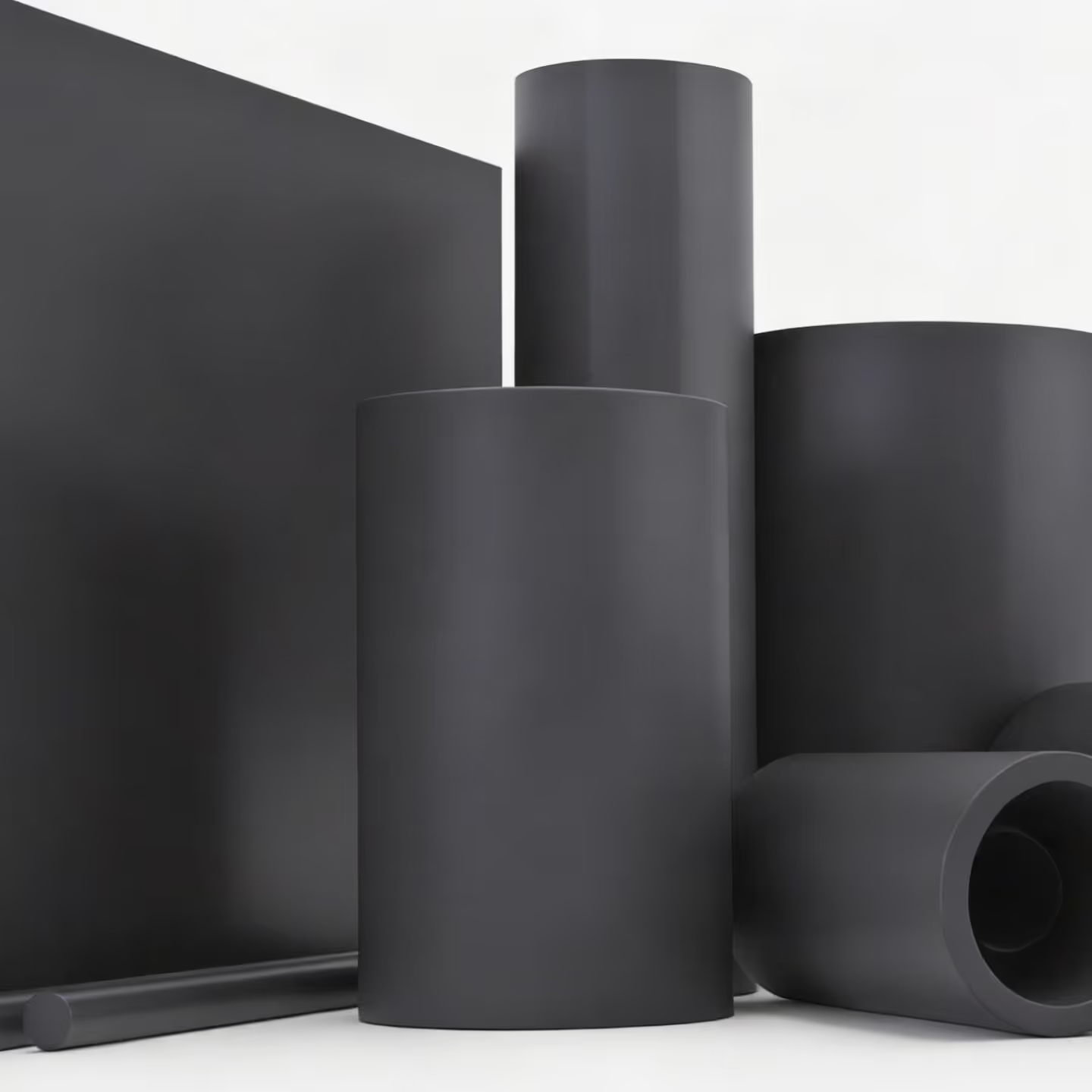
What Bearing Grade PPS Offers
Exceptional characteristics that ensure Bearing Grade PPS is perfect for sliding, rotating, and dynamically loaded parts.

Excellent Wear and Friction Performance
PTFE, carbon fiber, and graphite fillers provide stable sliding performance and reduced friction.

Improved Durability and Machining Behavior
Designed to reduce brittleness and improve resistance to cracking and chipping compared to traditional PPS bearing grades.

Cost-Effective Alternative to PEEK Bearing Grades
Suitable for many industrial wear applications where PEEK-level PV capability is unnecessary.

Dimensional Stability
Maintains tolerances under thermal and mechanical loading.

Chemical Resistance
Performs reliably in chemically aggressive industrial environments.

Common components made from Bearing Grade PPS
Machined components that excel in applications requiring low friction and superior wear resistance.

Dynamic Industrial Components
Moving or load-bearing parts designed for repeated contact, wear resistance, and stable performance.

Sliding Wear Surfaces
Low-friction surfaces used in moving assemblies where reduced wear and smooth motion are important.

Valve Components
Machined parts for valves that need chemical resistance, dimensional stability, and reliable sliding performance.

Seals and Backup Rings
Durable sealing support components used in systems exposed to friction, pressure, chemicals, and heat.

Wear Rings
Machined rings designed for sliding contact, wear control, and dimensional stability in industrial systems.
Bushings and Sleeve Bearings
Low-friction cylindrical components used to support rotating shafts and reduce wear in moving assemblies.
Bearing Grade PPS Technical Properties

Bearing Grade PPS Rods, Plates & Tubular Bars
Extruded stock shapes are supplied in standard diameters and thicknesses, with custom dimensions available for specific applications.
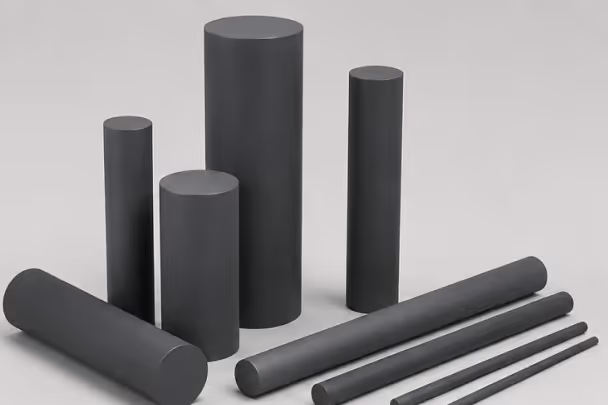
Rods
Extruded PPS Bearing Grade rods are available from 1/2" to 10" diameter.
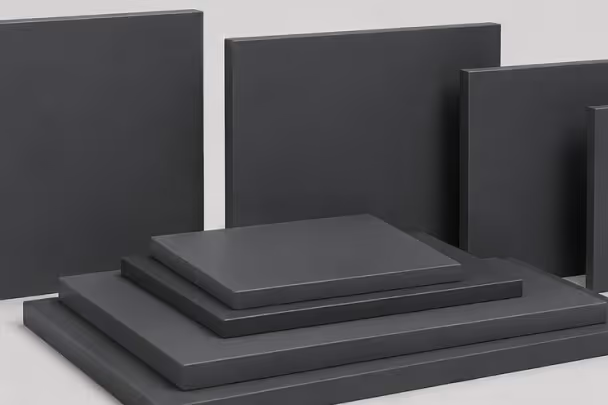
Plates
PPS Bearing Grade plates are supplied from 3/8" to 4" thickness.
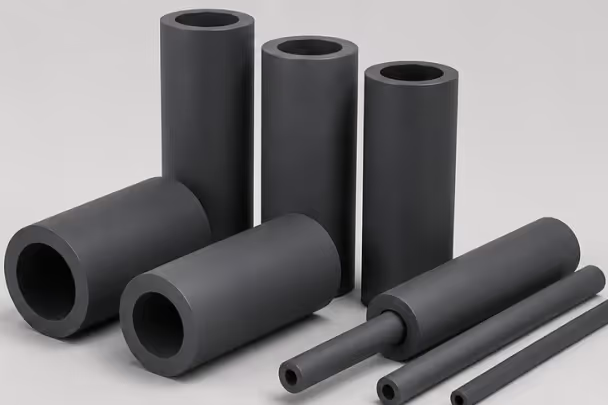
Tubular Bars
Tubular bars are available for bushings and cylindrical wear components requiring reduced machining waste and lower finished-part cost.

Trusted by World's Leading Companies


















How Bearing Grade PPS compares to other PPS grades
Quick reference guide to help you choose the right material.
Need help determining if Bearing Grade PPS is the right choice?
Share your part requirements, operating conditions, or motion characteristics and our technical team will guide you on grade selection, stock formats, and supporting documentation.
- Response within one business day
- Reviewed by our technical team
- No obligation or sales pressure
Frequently Asked Questions
PPS Bearing Grade provides low friction and wear resistance at significantly lower cost for applications not requiring the highest PV capability or continuous operating temperature of PEEK.
No. Carbon and graphite fillers may reduce electrical resistivity and provide static dissipative behavior.
Tubular bars reduce machining waste, lower raw material usage, and reduce finished-part cost for bushings and cylindrical wear components.