Unfilled PEEK for high-strength, chemically resistant machined components
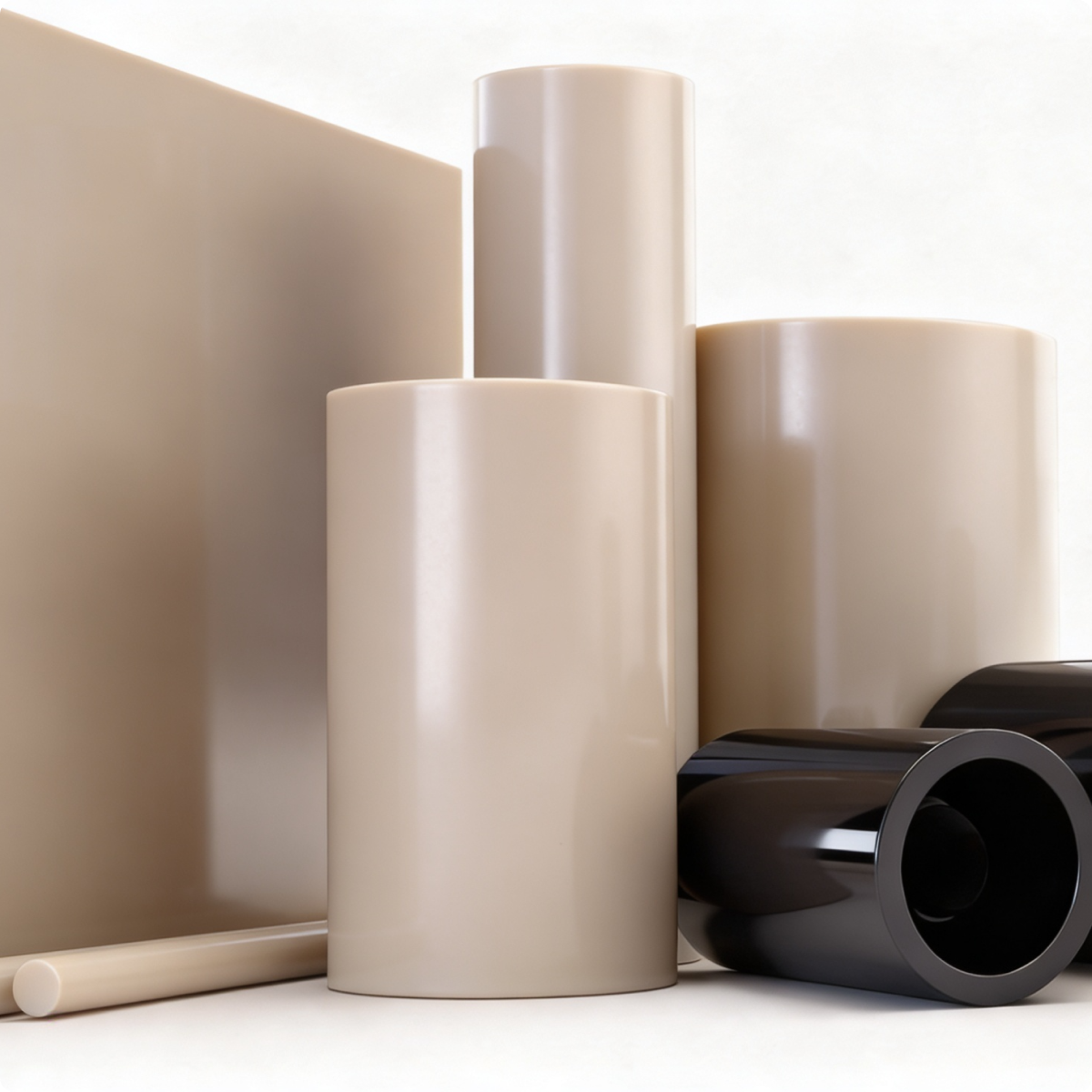
Unfilled PEEK supplied as extruded rods, plates and tubular bars. Designed for machined parts that require a balanced combination of strength, chemical resistance, thermal stability, and reliable machinability.

What Unfilled PEEK offers
High-performance characteristics that make PEEK suitable for demanding machined components.

Balanced mechanical performance
Delivers high strength and stiffness without any reinforcement, making it suitable for a wide range of structural and functional machined parts.

Excellent chemical resistance
Resists most organic and inorganic chemicals, including oils, fuels, solvents, and cleaning agents common in industrial environments.

High temperature capability
Maintains mechanical performance at elevated temperatures, supporting continuous use in demanding thermal conditions.

Good dimensional stability
Low moisture absorption and stable thermal behavior help parts hold tolerances during machining and in service.

Easier to machine than reinforced grades
With no fibers in the material, tool wear is lower and surface finishes are smoother than with glass- or carbon-filled PEEK.

Common components made from Unfilled PEEK
Typical machined parts that benefit from PEEK's balanced strength, chemical resistance, and thermal stability.

Medical and analytical device components
Handles sterilization processes and chemical exposure found in laboratory and diagnostic equipment.

Structural brackets and supports
Lightweight components for aerospace, industrial, and energy applications.

Semiconductor handling parts
Used in precision components where cleanliness, dimensional stability, and chemical resistance are critical.

Electrical insulation components
Machined for connectors, carriers, and support structures requiring thermal and electrical stability.

Seals, valve seats, and pump components
Suitable for fluid handling equipment exposed to heat, pressure, and aggressive chemicals.

Bushings and bearings
Used in pumps, compressors, and mechanical systems where strength and chemical resistance are required.
Unfilled PEEK Technical Properties
| Property | Test | PEEK Unfilled | Unit |
|---|---|---|---|
| Tensile Strength | ASTM D638 | 14,000 | PSI |
| Tensile Modulus | ASTM D638 | 520 | KSI |
| Elongation @ Break | ASTM D638 | 30 | % |
| Flexural Strength | ASTM D790 | 21,700 | PSI |
| Flexural Modulus | ASTM D790 | 500 | KSI |
| Compressive Strength | ASTM D695 | 17,000 | PSI |
| Izod Impact (Notched) | ASTM D256 | 1.3 | ft-lb/in |
| Rockwell Hardness | ASTM D785 | M95 | - |
| Property | Test | PEEK Unfilled | Unit |
|---|---|---|---|
| Melting Temp | ASTM D3418 | 644 | °F |
| Glass Transition | DSC | 304 | °F |
| HDT (264 psi) | ASTM D648 | 311 | °F |
| CLTE | ASTM E831 | 2.8 | 10⁻⁵/°F |
| Continuous Service | - | 500 | °F |
| Property | Test | PEEK Unfilled | Unit |
|---|---|---|---|
| Volume Resistivity | ASTM D257 | 10¹⁶ | ohm-cm |
| Property | Test | PEEK Unfilled | Unit |
|---|---|---|---|
| Coeff. of Friction | ASTM D3702 | 0.35 | - |
| Limiting PV | - | 3,500 | ft·lb/in²·min |
| Property | Test | PEEK Unfilled | Unit |
|---|---|---|---|
| Specific Gravity | ASTM D792 | 1.3 | gm/cm³ |
| Water Absorption (24h) | ASTM D570 | 0.1 | % |

PEEK (unfilled) rods, plates & tubular bars
Extruded stock shapes are supplied in standard diameters and thicknesses, with custom dimensions available for specific applications. All unfilled PEEK shapes are extruded and annealed to support consistent machining performance.
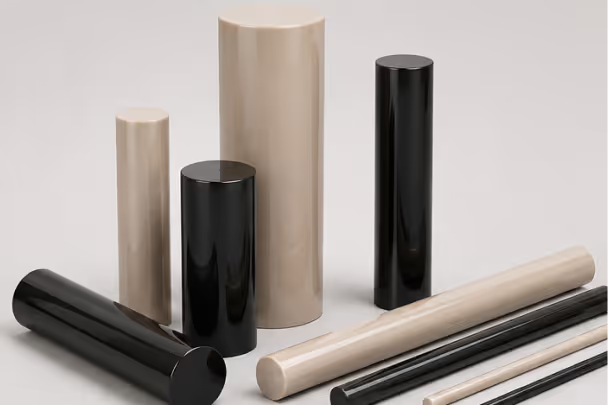
Rods
Unfilled PEEK rods are available in a range of diameters suitable for bushings, bearings, seals, and structural components. Sizes typically available from 3/8" to 8" diameter.
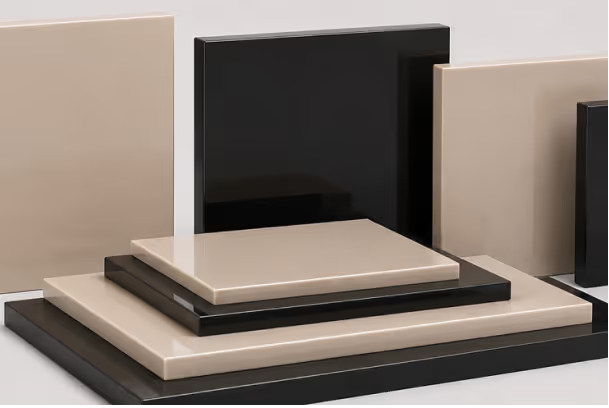
Plates
Unfilled PEEK plates are supplied in standard thicknesses for machined brackets, housings, and precision components. Plates available from 3/8" to 4" thickness.
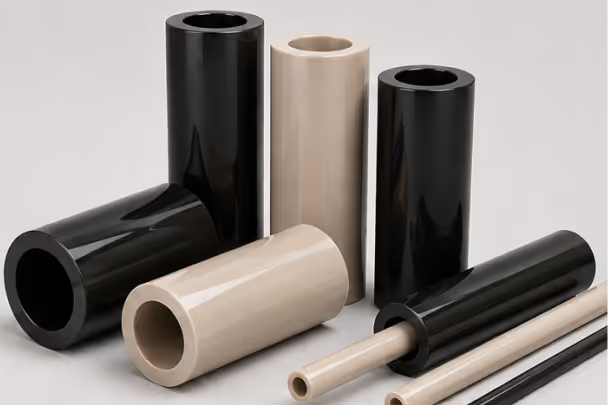
Tubular bars
Tubular bars are supplied for applications requiring reduced weight while maintaining strength and dimensional stability.

Trusted by World's Leading Companies

















How Unfilled PEEK compares to other PEEK grades
Quick reference guide to help you choose the right material.
Need help determining if unfilled PEEK is the right choice?
Share your part requirements, operating conditions, or material challenges and our technical team will guide you on grade selection, stock formats, and supporting documentation.
- Response within one business day
- Reviewed by our technical team
- No obligation or sales pressure
Frequently Asked Questions
Unfilled PEEK is the base grade of polyether ether ketone without fiber or lubricant additives. It offers a balanced combination of strength, chemical resistance, thermal stability, and machinability.
It can be used for moderate wear applications, but bearing-grade PEEK is better suited for low friction and high wear environments.
Yes. Its low moisture absorption and stable thermal behavior support tight tolerances when proper machining practices are followed.
Yes. Unfilled PEEK provides excellent electrical insulation across a wide temperature range.
Moisture absorption is low, helping parts maintain dimensional and electrical stability in humid environments.
Unfilled PEEK is supplied as extruded rods, plates, and tubular bars in standard sizes, with custom dimensions available on request.
Yes. Unfilled PEEK maintains mechanical performance at elevated temperatures suitable for continuous industrial use.
Unfilled PEEK is the better choice when ease of machining, smoother surface finish, or higher ductility is required, and when extreme stiffness or very low thermal expansion is not critical.
Yes. Because it contains no glass or carbon fibers, unfilled PEEK is significantly less abrasive, resulting in reduced tool wear and more consistent surface finishes.
Yes, unfilled PEEK supports precision machining, especially for parts with fine features or thin sections. For applications where thermal expansion must be minimized further, reinforced grades may be preferred.
Unfilled PEEK offers excellent chemical resistance and maintains mechanical performance when exposed to oils, fuels, solvents, and most industrial chemicals.
In many applications, yes. Unfilled PEEK is often used to replace metal where weight reduction, corrosion resistance, or electrical insulation is required, provided stiffness requirements are within its limits.
The primary reason is chemical and steam resistance. While Ultem 1000 is excellent up to 170°C, it can crack when exposed to certain solvents (like acetone). PEEK is virtually inert to almost all chemicals and can handle continuous operation at 250°C, making it the choice for the most extreme environments.
Standard PPS is notoriously brittle—it can shatter like a ceramic if dropped or during aggressive machining. Impact-Modified PPS has elastomeric "tougheners" added to the resin. This increases its ductility (elongation), allowing it to survive mechanical shocks and making it much safer to machine into thin-walled parts.
Ultem 1000 (PEI) is usually the winner here. Because it is an amorphous polymer, it doesn't have the crystalline structure that causes PEEK or PPS to shrink or warp during the machining process. If you need a complex manifold to stay perfectly flat and square, Ultem is the most predictable material.
Yes, but with a caveat. Ultem 1000 is excellent for many sterilization methods (EtO, Gamma), but for repeated steam autoclaving, PEEK is superior. Over hundreds of cycles, Ultem can begin to show "crazing" (micro-cracks), whereas PEEK remains structurally unchanged.
Yes. If your operating temperature is below 200°C and you need excellent chemical resistance, Impact-Modified PPS can offer similar performance to PEEK at a significantly lower material cost. It is a favorite for high-volume chemical handling parts where PEEK would be over-engineered.
Unfilled PEEK has extremely high purity. It does not leach ionic contaminants and is resistant to the aggressive acids and bases used in wafer etching. Its low outgassing also makes it ideal for the high-vacuum environments found in semiconductor fabrication.
Ultem 1000. As an amorphous resin, it is highly susceptible to Environmental Stress Cracking (ESC). Contact with certain solvents, especially while the part is under a mechanical load, can cause it to fail instantly. PEEK and Impact-Modified PPS are semi-crystalline and are virtually unaffected by such solvents.
Ultem 1000: Distinctive translucent amber (honey-like). PEEK: Opaque tan or "light coffee" color. Impact-Modified PPS: Opaque, usually dark brown to black.
Ultem 1000 generally has the edge. It possesses very high dielectric strength and maintains its electrical properties over a wide range of frequencies and temperatures. This is why it is the industry standard for high-performance electrical connectors and bobbins.
PEEK or Ultem 1000 are best. Both have high elongation-at-break (up to 40-60%). Even though it is "modified," PPS is still the least ductile of the three; if your design requires a living hinge or a snap-fit that must deflect significantly, PEEK is the safest choice.