Cost-Effective PPS Alternative to PEEK for Durable Industrial Components
Designed for applications requiring chemical resistance, dimensional stability, and improved durability at a lower cost than PEEK.
Unfilled PPS offers reliable machining performance and stable mechanical properties for demanding industrial environments where ultra-high temperature capability is not required.

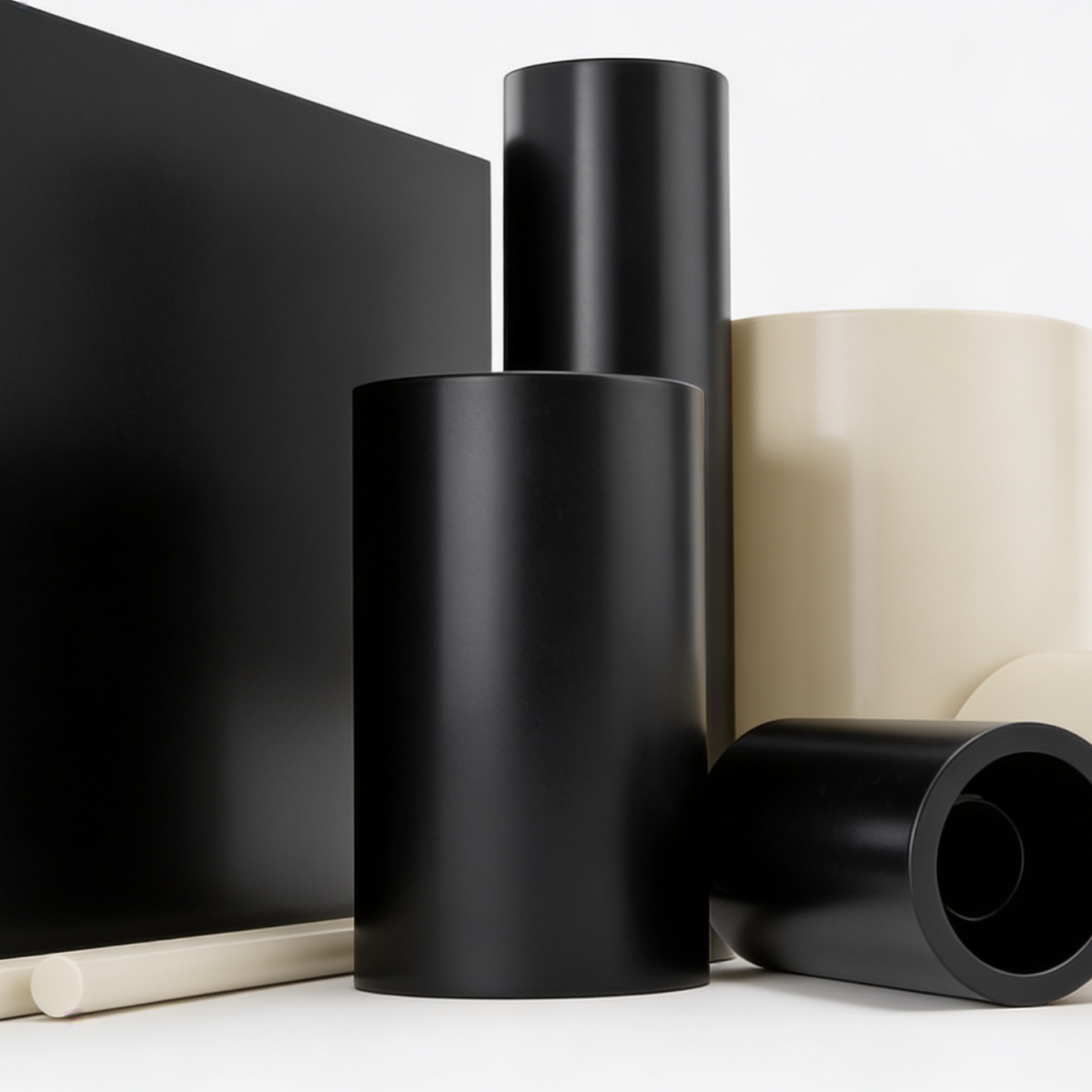
What Unfilled PPS Offers
Performance characteristics that make Unfilled PPS suitable for chemically aggressive and high-temperature applications.

Improved Durability and Toughness
Enhanced toughness helps reduce brittleness and improve resistance to cracking, chipping, and handling damage compared to standard PPS.

Cost-Effective Alternative to PEEK
Provides many of the dimensional stability and chemical resistance benefits associated with high-performance polymers while offering a lower-cost solution for industrial applications that do not require PEEK-level temperature capability.

Excellent Chemical Resistance
Performs reliably in chemically aggressive environments exposed to fuels, oils, solvents, acids, and industrial process chemicals.

Reliable Machining Performance
Designed for stable machining behavior with improved resistance to edge chipping and cracking compared to more brittle PPS formulations.

Strong Dimensional Stability
Low moisture absorption and thermal stability help maintain tolerances during machining and operation.

Common Components Made from Unfilled PPS
Typical machined parts that benefit from PPS's chemical resistance and thermal stability.
Automotive under-the-hood components
Handles exposure to fuels, oils, and elevated temperatures.
Industrial structural components
Used where chemical exposure and dimensional stability are critical.
Semiconductor equipment parts
Suitable for fixtures and supports requiring cleanliness and chemical resistance.
Electrical and electronic components
Used for connectors and insulating parts exposed to heat and chemicals.
Seals, seats, and housings
Provides stability and resistance in fluid handling systems.
Pump and valve components
Used in chemical processing equipment exposed to aggressive media.
Unfilled PPS Technical Properties

Unfilled PPS Rods, Plates and Tubular Bars
Extruded stock shapes are supplied in standard diameters and thicknesses, with custom dimensions available for specific applications.
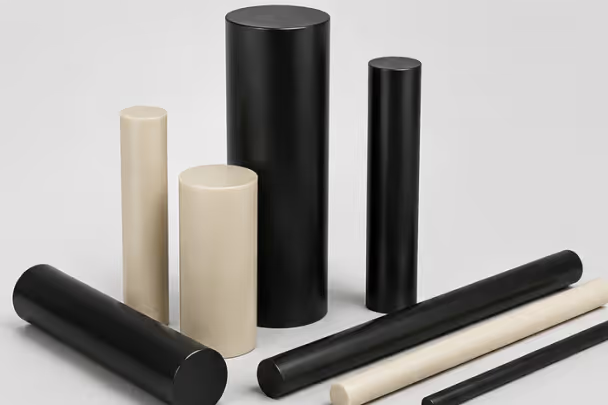
Rods
Extruded Unfilled PPS rods are supplied for durable machined components requiring toughness and dimensional stability. Rods available from 1/2" to 4” diameter.
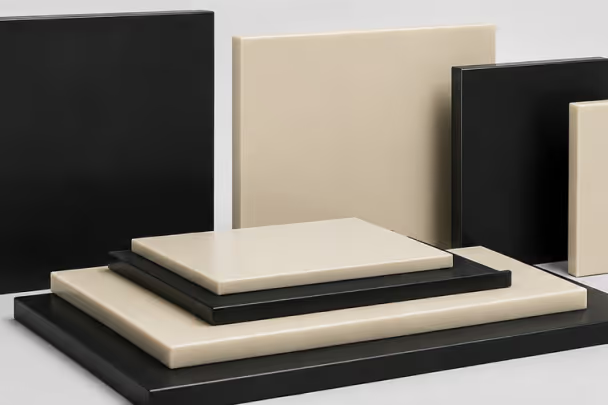
Plates
Unfilled PPS plates are supplied for structural and precision machined applications.Plates available from 3/8" to 4" thickness.
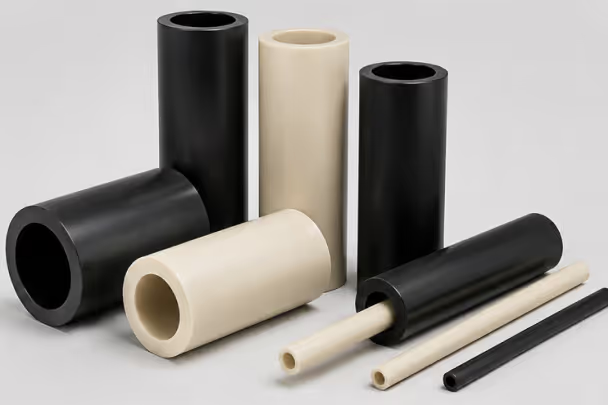
Tubular bars
Tubular bars are available for bushings, wear rings, and cylindrical components where lower machining waste and improved material utilization are important.

Trusted by World's Leading Companies


















How Unfilled PPS compares to other PPS grades
Quick reference guide to help you choose the right PPS material.
Need help determining if Unfilled PPS is the right choice?
Share your chemical exposure details, operating temperatures, or part requirements and our technical team will guide you on grade selection, stock formats, and supporting documentation.
- Response within one business day
- Reviewed by our technical team
- No obligation or sales pressure
Frequently Asked Questions
Choose PPS IM when chemical resistance and ease of machining are more important than maximum stiffness or load-bearing capability.
Unfilled PPS can serve as a cost-effective alternative to PEEK in applications where the higher continuous operating temperature capability of PEEK is not required.
No. Impact modification improves toughness and durability, but slightly reduces stiffness and rigidity compared to standard PPS or heavily glass-filled PPS grades