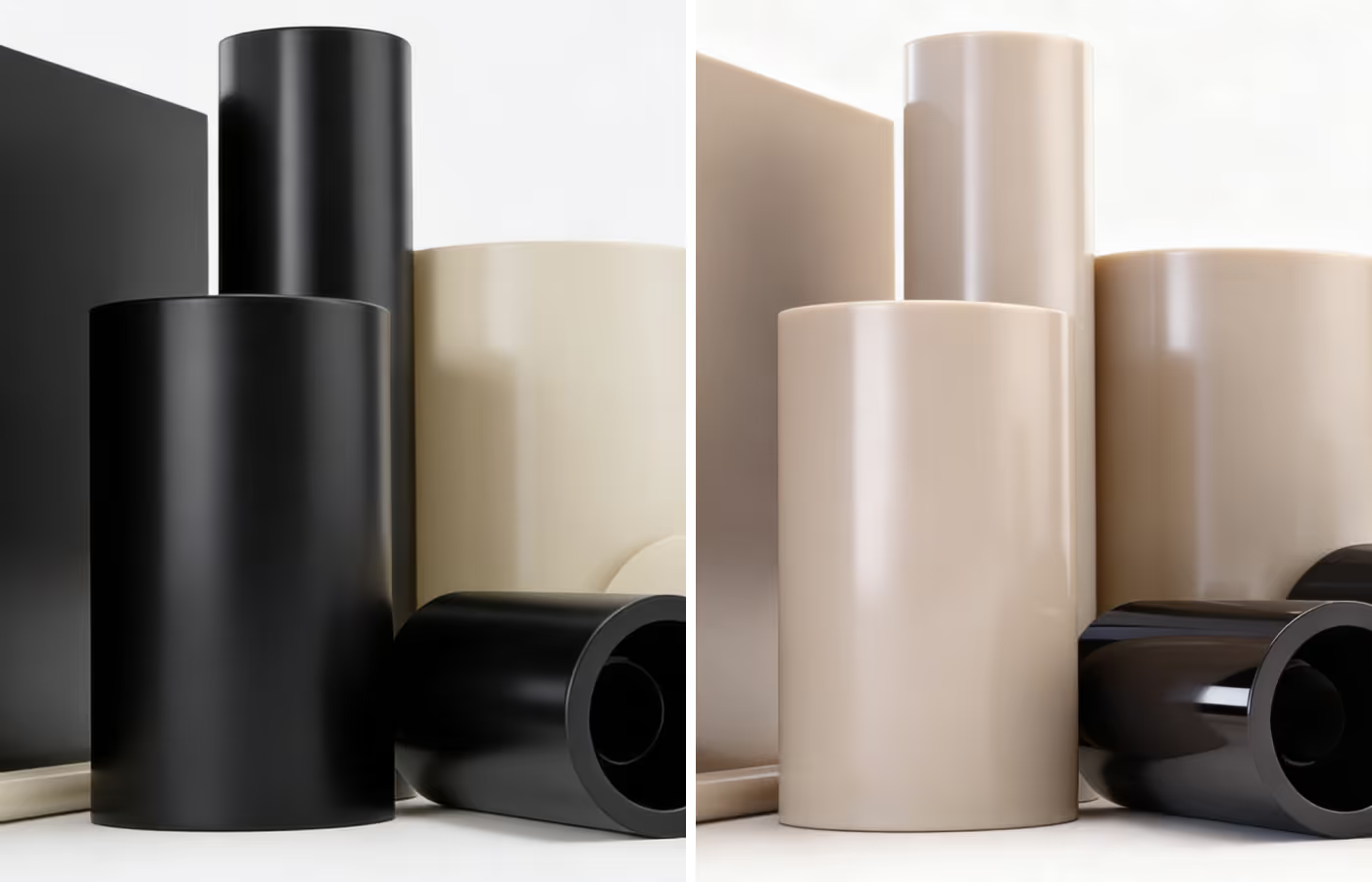
You will never get fired for selecting PEEK for a mission-critical application requiring high temperature capability, chemical resistance, and structural performance.
However, the engineer at your competitor may get promoted for selecting a material that delivers the same functional performance at a significantly lower cost.
Could PPS be the smarter engineering choice?
For decades, PEEK has been the default selection for demanding machined components because of its exceptional performance and the widespread availability of stock shapes. Yet many applications never utilize PEEK's full performance envelope. For operating temperatures below approximately 220°C (428°F), PPS often provides equivalent functionality while offering substantial cost savings.
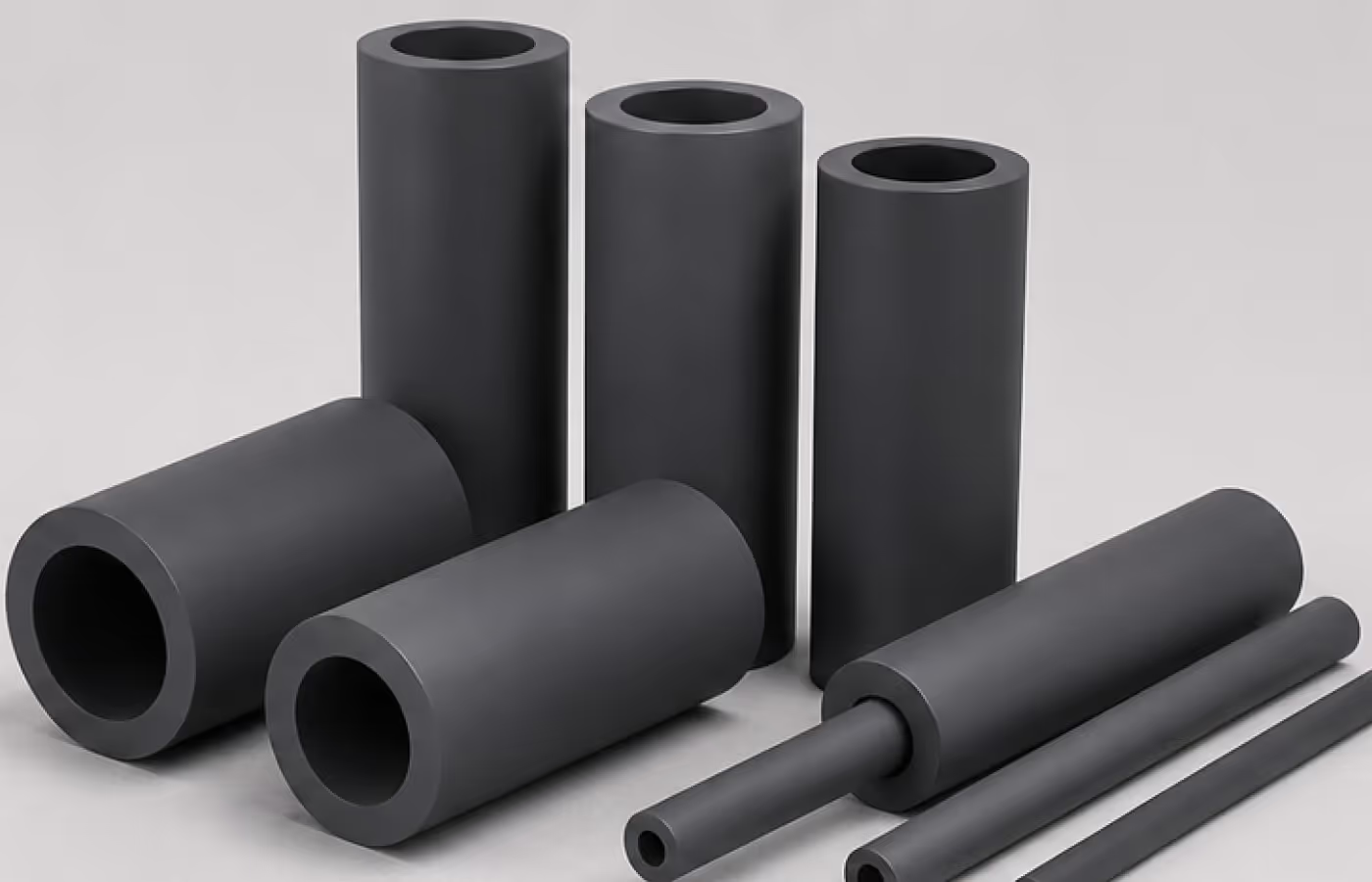
Historically, PPS was overlooked because large-diameter rods, thick plates, tubular bars, and specialty grades were not readily available. Quantum AEP has changed that equation by developing proprietary extrusion and annealing technologies that enable the production of PPS stock shapes in sizes and grades comparable to those traditionally associated with PEEK.
Today, engineers can choose PPS because it is the right material for the application—not because it is the only material available.
Impact-Enhanced PPS vs. Unfilled PEEK
Why Consider PPS?
Impact-enhanced PPS combines the chemical resistance, dimensional stability, and low moisture absorption of conventional PPS with significantly improved toughness. For applications operating below 220°C, it can often provide the performance required without the premium cost associated with PEEK.
Qualitative Comparison
Cost Efficiency
Impact-enhanced PPS typically offers substantial cost savings compared with unfilled PEEK. For many industrial, aerospace, semiconductor, and chemical processing applications, material cost reductions can be significant without compromising performance.
Toughness and Durability
Traditional PPS has historically been criticized for brittleness. Quantum AEP's impact-enhanced PPS formulations address this limitation by significantly improving toughness while maintaining PPS's core advantages.
Chemical Resistance
Both materials offer outstanding chemical resistance. PPS provides resistance to a broad range of acids, bases, solvents, fuels, and cleaning chemicals and, in many environments, performs comparably to or better than PEEK.
Moisture Absorption and Dimensional Stability
One of PPS's greatest advantages is its extremely low moisture absorption.
This results in exceptional dimensional stability, particularly in humid or wet environments.
Thermal Performance
PEEK remains the superior material for continuous service above 220°C.
For applications below this threshold, PPS often provides the optimal balance of performance and value.
Typical Property Comparison
Key Takeaways
✓ Significant cost savings
✓ Exceptional chemical resistance
✓ Outstanding dimensional stability
✓ Extremely low moisture absorption
✓ Improved toughness compared with traditional PPS
✓ Ideal for applications operating below 220°C
PPS GF30 vs. PEEK GF30
The comparison becomes even more compelling when reinforced grades are evaluated.
Many engineers assume that selecting glass-filled PEEK automatically delivers superior mechanical performance. In reality, modern PPS GF30 grades provide remarkably similar structural properties at a significantly lower cost.
The PPS GF30 data below is based on a high-toughness, hydrolysis-resistant PPS GF30 formulation with a tensile strength of 150 MPa and tensile elongation of 2.3%.
Qualitative Comparison
Structural Performance
PPS GF30 delivers tensile strength and stiffness that closely match PEEK GF30.
For many structural components, housings, fixtures, brackets, and precision-machined parts, the mechanical differences are negligible.
Dimensional Stability
PPS GF30 absorbs approximately one-tenth the moisture of PEEK GF30, resulting in superior dimensional stability in humid environments.
Thermal Capability
PEEK GF30 retains a significant advantage above 220°C.
Below this threshold, PPS GF30 frequently provides equivalent performance.
Cost Efficiency
PPS GF30 can often reduce material costs by 30–50% compared with PEEK GF30 while maintaining comparable mechanical performance.
Property Comparison
Key Takeaways
✓ Tensile strength approaches PEEK GF30
✓ Similar elongation and stiffness
✓ Superior moisture resistance
✓ Exceptional dimensional stability
✓ Significant cost advantage
✓ Excellent choice for structural applications below 220°C
Why PPS Is Becoming the Smart Engineer's Choice
Historically, engineers often selected PEEK because it was the safest choice. In many cases, PEEK's additional temperature capability provided a comfortable engineering margin.
Today, the question is different.
Does the application actually require PEEK?
If the answer is no, PPS becomes extremely attractive.
For applications below approximately 220°C (428°F), PPS offers:
✓ Comparable chemical resistance
✓ Exceptional dimensional stability
✓ Lower moisture absorption
✓ Comparable structural performance in reinforced grades
✓ Excellent machinability
✓ Availability in rods, plates, and tubular bars
✓ Significant cost savings
The Quantum AEP Advantage
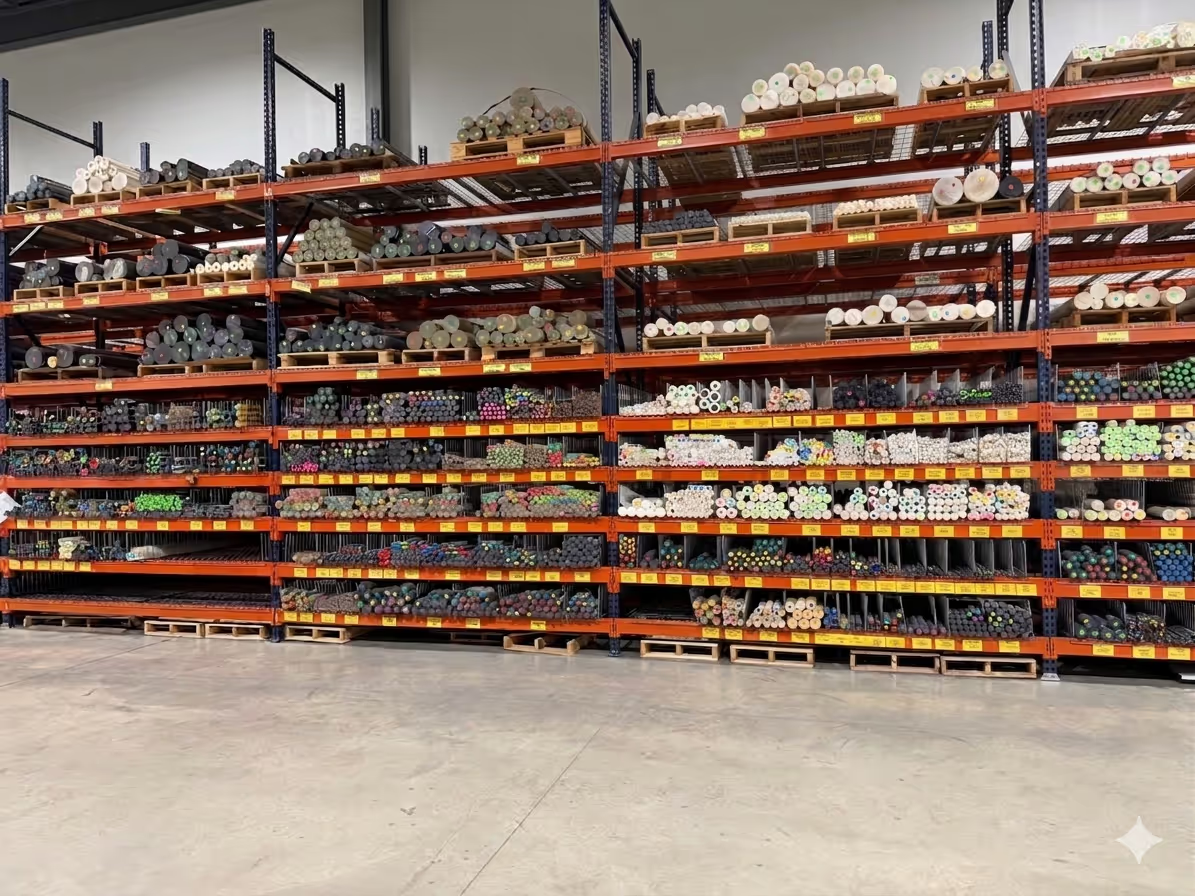
Quantum AEP manufactures both PPS and PEEK stock shapes in a wide range of grades and sizes, including:
PPS Grades
- Impact-Modified PPS
- PPS GF30
- PPS GF40
- PPS CF30
- PPS Bearing Grade (10/10/10)
- PPS ESD
Available Stock Shapes
- Rods: 1/2" to 8" diameter
- Plates: 1/2" to 4" thick
- Tubular Bars: 4" to 12" OD with 1/2" to 1" wall thickness
Using proprietary extrusion and annealing technologies, Quantum AEP produces stock shapes engineered for superior machinability, enhanced mechanical performance, outstanding dimensional stability, and consistent quality from batch to batch.
Conclusion
PEEK remains the benchmark material for the most demanding applications involving extreme temperatures, severe mechanical loading, and mission-critical performance requirements.
However, many applications do not require PEEK's full capability.
For operating temperatures below 220°C, PPS often delivers the chemical resistance, dimensional stability, structural performance, and long-term reliability engineers need—at a significantly lower cost.
The smartest material selection is not always the material with the highest performance. It is the material that delivers the required performance most efficiently.
For a growing number of applications, that material is PPS.
The result is not a compromise. It is a better engineering decision.

.avif)
.avif)